The Discovery of Prebiotic Molecules within Meteorite Fragments
Researchers have uncovered vital prebiotic molecules, including amino acids and carbon compounds, within a meteorite that crashed into a New Jersey home on July 16, 2024. This discovery, detailed in a recent study, highlights how these elements might have contributed to life's origin on Earth. The significance of this finding cannot be understated; the presence of these molecules in space rocks has long fascinated scientists searching for answers about how life began. The intersection of astrobiology and chemistry in this context sheds light on theories about the origin of life, suggesting that essential building blocks may not just originate from Earth but rather are common throughout the universe.
Swift Action Ensures Preservation of Evidence
Led by Peter Jenniskens from the SETI Institute and NASA's Ames Research Center, the study emphasizes the homeowner's quick response in collecting the meteorite fragments. Had the homeowner not acted promptly, the integrity of the organic compounds could have been compromised. This incident serves as a reminder of the importance of rapid preservation techniques in scientific research as contamination could easily skew results. The collection method—using gloves and aluminum foil to avoid direct contact—highlights a meticulous attention to protocol that is essential in high-stakes research.
The homeowner recounted the moment: "I heard a loud crash, found a hole in the ceiling, and noticed a sulfur-like smell accompanied by black fragments and dust throughout my bedroom." Such immediate action was key in preventing contamination of the precious specimens. In such unusual events, the human element often plays a significant role; the homeowner's instinctual response turned a bizarre accident into a pivotal moment for scientific inquiry.
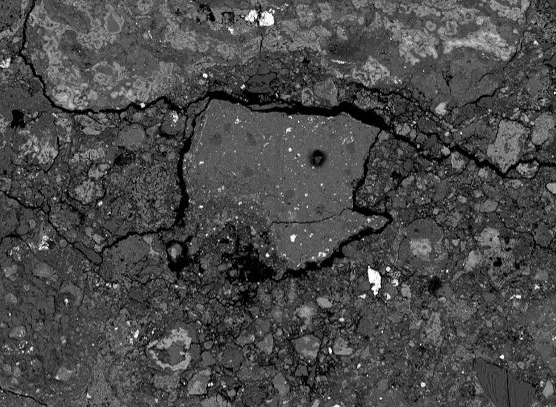
Geological Insights from the Hillsborough Meteorite
The fragments are believed to originate from a primordial asteroid that might have experienced unique geological processes involving salty water. Jenniskens pointed out that the meteorite fragments show traces of salty fluids, providing insights into conditions that were likely present in the early solar system. Such findings could bolster theories around how organic compounds may have traveled through the cosmos, ultimately finding their way to Earth.
This meteorite, named Hillsborough after the town where it fell, was part of a larger meteor event that day. Earlier, at least 60 observers across New York and New Jersey reported seeing a meteor traveling at an impressive speed of 32,000 mph (51,500 km/h). Witnesses described feeling a shock wave as it broke apart at approximately 22 miles (35 kilometers) above Earth, and Doppler weather radar later detected the falling fragments. These observations reveal the collaborative effort between citizen science and professional research; without reports from the public, tracking the meteor's journey would have been far more challenging.
Tracking the Meteor's Origin and Classification
The American Meteor Society utilized data from multiple sources, including cameras in Northford, Connecticut, and Douglassville, Pennsylvania, to trace the meteor's origin back to the asteroid belt. According to operations manager Mike Hankey, "the path traced back to low in the asteroid belt," enhancing our understanding of the meteor's trajectory. This kind of data not only aids in mapping the movement of celestial bodies but also helps researchers connect the dots between space events and their terrestrial impacts.
Interestingly, Hillsborough stands out as only the second observed stony meteorite of its classification to make landfall. Subsequent analyses revealed it is rich in ancient brines, classifying it as a carbonaceous chondrite, a type of space rock believed to carry vital ingredients for life. The classification adds another layer of significance; carbonaceous chondrites are often seen as treasure troves of information regarding the building blocks of life, far beyond our planet.
Future Research Directions: What Lies Ahead?
Future comparisons of the salt minerals contained in Hillsborough with samples from other carbonaceous chondrites, such as asteroids Ryugu and Bennu, could further illuminate the conditions that may have fostered life in our early solar system. Each new finding expands our understanding, offering pieces to the puzzle of how life adapts and flourishes. But there's skepticism in the field—can these findings lead to concrete conclusions about life's origins, or are they simply coincidental correlations? What this means for you, if you're working in this space, is that continued vigilance and investigation are needed to discern between mere data and stories that truly matter.
Implications for Astrobiology and the Origin of Life
This discovery isn't just another meteorite that crashed to Earth. It may signal a turning point in how we approach questions about life's origins. The implications extend beyond just New Jersey; we might have found a correlation between early solar system conditions and the molecular building blocks of life. This would imply that the chemistry of life's origins could be more universal, hinting that similar processes might be taking place on distant planets and asteroids. The ongoing research around Hillsborough could therefore pave the way for future explorations and missions aimed at uncovering life's potential elsewhere in the cosmos.


