Freshwater runoff from Greenland's rapidly diminishing ice sheet is poised to disrupt the Atlantic Ocean's crucial currents, which play a vital role in regulating the global climate. However, a recent study indicates that this influx of meltwater is unlikely to cause an irreversible breakdown of the Atlantic Meridional Overturning Circulation (AMOC), despite potentially significant weakening.
By the end of the century, projections suggest that Greenland meltwater could contribute an additional 10% to 20% reduction in AMOC strength, on top of the declines that many scientists already foresee. As it stands, the AMOC, responsible for transporting warm water from the tropics to the Northern Hemisphere and cold water back to Antarctica, is at its weakest state in over a thousand years, driven by the melting of Arctic ice and increasing ocean temperatures. Models indicate that this weakening will persist for decades, which could lead to extreme weather changes, such as colder temperatures in Northwest Europe, rising sea levels along the U.S. East Coast, and enhanced drought conditions across equatorial regions.
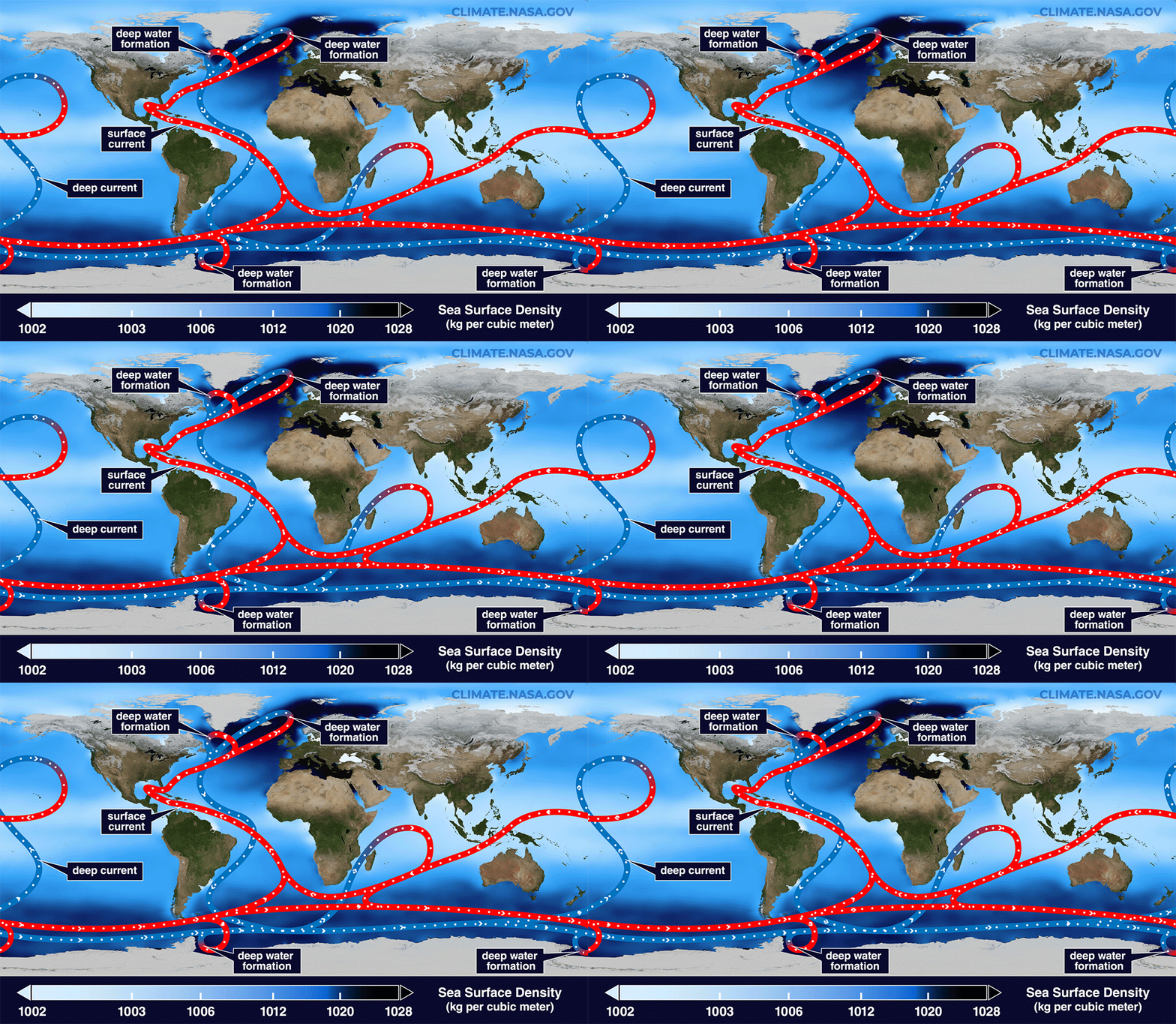
The findings suggest that by the year 2300, runoff from Greenland could account for up to 40% of the AMOC weakening outlined in various climate models. This underscores the importance of accounting for the freshwater input from Greenland, which current models often overlook. Jost von Hardenberg, a co-author and professor at the Polytechnic University of Turin, emphasized that while initial impacts may be modest, the most significant effects are likely to manifest later in the century. "The future is dictated more by what we add in the later part of the century," he remarked.
As fresh meltwater and rising temperatures inhibit the formation of the deep, cold currents essential for driving the AMOC south towards Antarctica, there’s a critical need for accurate modeling of the Greenland ice sheet’s behavior. Many existing climate models integrate Arctic meltwater but lag in considering Greenland’s runoff due to its perceived lesser impact over short timescales, as von Hardenberg indicated.
The researchers employed a notable strategy by incorporating the Community Ice Sheet Model version 2 (CESM2) into the EC-Earth3 global climate model. This fusion allowed for a comparative analysis of AMOC weakening with and without the influence of Greenland's ice, leading to revealing insights into its crucial role.
The study, published on June 19 in the journal Science Advances, posits that the melting ice from Greenland will significantly affect Atlantic currents in the decades following 2100. Von Hardenberg noted that the severe melting from Greenland is expected to accelerate notably after 2100. Therefore, understanding the dynamic interplay between ice melt and ocean currents is imperative.
While prior studies have suggested a potential total collapse of the AMOC under climate change scenarios, this new model demonstrated a capacity for recovery if the meltwater influence is diminished or greenhouse gas emissions are curtailed. This recovery indicates a stability within the AMOC that had not been fully appreciated, framing it as vulnerable to severe weakness but not necessarily facing a total failure, according to von Hardenberg. "We're looking at a scenario of significant weakening, but not catastrophic shutdown," he concluded.
The implications of this study highlight the urgency of integrating Greenland's melting ice into future climate models to refine our understanding of the AMOC's trajectory. Von Hardenberg advocates for further studies incorporating this vital component to better answer how various scenarios could affect the future of the AMOC.
Experts in the field agree that incorporating the Greenland ice sheet into climate projections enhances AMOC predictive accuracy. Jonathan Baker, a senior climate scientist at the Met Office in the U.K., found the study valuable, noting its direct evaluation of the uncertainties surrounding future AMOC projections. He acknowledged the need for additional model reproductions to substantiate the findings. Nicholas Foukal from the University of Georgia's Skidaway Institute concurred, asserting that while utilizing a single model may seem limiting, the results align with other research indicating that far more freshwater would be necessary for irreversible AMOC changes.
However, not all feedback was unreservedly positive. Some experts caution that the model's design may render the AMOC more resilient than other assessments suggest, thereby necessitating cross-model validation to ensure robust conclusions. Sybren Drijfhout, a professor at the University of Southampton, expressed that while the findings are intriguing, they may not universally apply across different modeling frameworks. The wider scientific community is urged to continue exploring the implications of Greenland's ice on ocean circulation, as understanding these dynamics remains pivotal in addressing the ramifications of climate change.


