Filipino embalming education has expanded, yet the profession’s pay and oversight have struggled to keep pace. Training programs now draw more students, and industry groups have pushed for clearer standards. But many embalmers still earn around minimum wage, lack hazard pay, and have little representation in the committee that licenses them.
That mismatch is central to the field’s current position: demand for the work is steady, while the systems supporting its practitioners remain incomplete. The country also lacks a reliable count of active licensed embalmers, complicating efforts to plan staffing as overseas employers seek Filipino workers.
A profession working to change its image
When Jonnel Cribello became a licensed embalmer in 2009, people often asked whether he had washed his hands before shaking theirs. The question reflected a long-running public image of embalmers as uneducated and untidy, said James Patrick Ovejera, president of the Professional Embalmers Association of the Philippines Inc. (PEAP).
Ovejera recalled movie portrayals that cast mortuary workers as shadowy, unkempt figures. That perception began to shift around 2010, when the Department of Health (DOH) renewed efforts to formalize the profession, he said.
Cribello came to the field from nursing. He had once hoped to become a surgeon, then found an embalming school through a media feature. Working in a mortuary, he said, seemed like a direct way to continue working with the human body.
He now directs a program and trains students at the Philippine College of Advanced Studies (PCAS) in Cebu. It is one of four active accredited embalming schools in the Philippines and the only one outside Luzon.
Training has grown, but access remains uneven
The regulatory framework took shape over decades. Presidential Decree No. 856, the Code on Sanitation of the Philippines, dates to 1975 and covers funeral establishments, embalming facilities and the disposal of the dead. Detailed rules for embalmers followed in 1996, establishing the DOH Committee of Examiners for Undertakers and Embalmers (DOH-CEUE), which licenses practitioners and accredits training schools.
In 2010, the DOH reinstated the committee and worked with the University of the Philippines to revise the curriculum and licensing exam under Administrative Order No. 2010-0033. That order also set minimum wage as the entry point for embalmer pay. Officials and training schools then traveled across regions to explain the rules to local authorities. Feedback led to a refresher program for people with long-expired licenses and a Filipino-language version of the exam, which had previously been offered in English.
“There are a lot of people [who] are very skilled coming from the provinces…but they couldn’t really understand English well,” Ovejera said. He was teaching at the Philippine Embalmers and Undertakers Review and Training Center (PEURTC) in Manila and took part in those outreach efforts.
Today, an aspiring embalmer needs a high school diploma, at least 140 hours of instruction at an accredited school, and documented experience embalming at least 10 cadavers within a year. The DOH’s Health Facilities and Services Regulatory Bureau issues licenses after applicants pass the committee’s exam, held in March and September. Under rules revised in 2021, a license is valid for three years and can be revoked if it is not renewed within five.
Most students spend roughly two months in class followed by a month of practical work with cadavers at partner funeral homes. Tuition runs about P27,000 to P30,000, depending on the school.
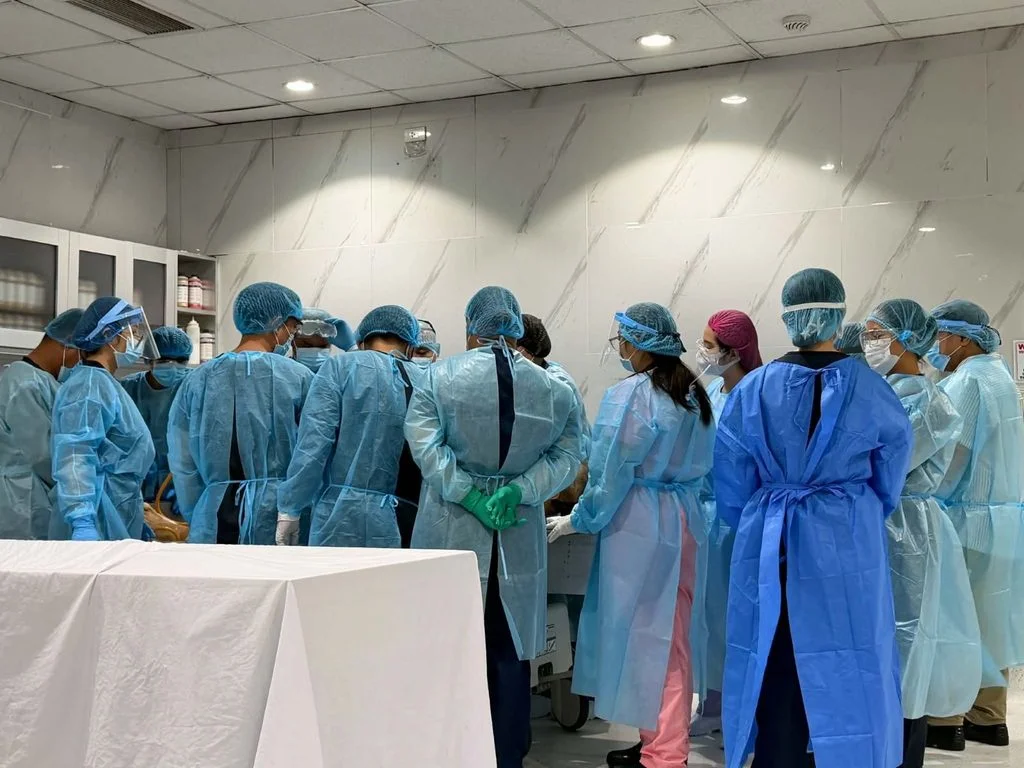
PCAS enrolls two cohorts a year, each with about 60 students, up from 10 per cohort in 2009. More than half of Cribello’s students have already worked in funeral homes or come from funeral-owning families. The average student is around 45, and his oldest was 75. Returning to study after years away from school can be a challenge, Cribello said.
PEURTC’s local classes typically enroll 40 to 60 students. It also teaches groups of five to eight students from nearby Southeast Asian countries, including Singapore, Thailand and Malaysia. Ovejera said affordability and English-language instruction help draw them to the Philippines.
Practice shaped by cost, climate and local wakes
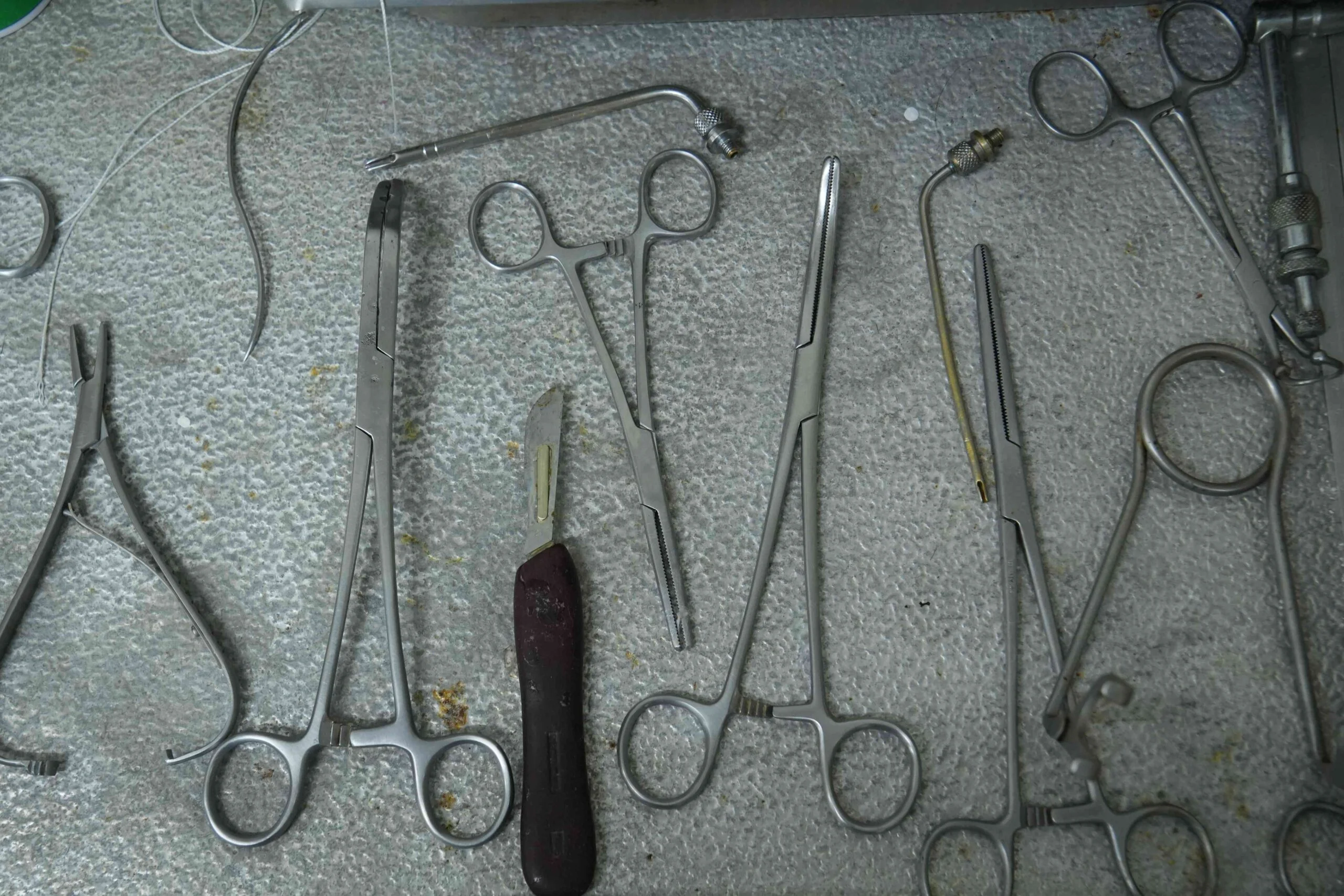
Training and equipment remain comparatively limited. Cribello estimated that US programs use 30 to 35 pieces of equipment, while Filipino embalmers learn with a smaller set of tools that has changed little over time.
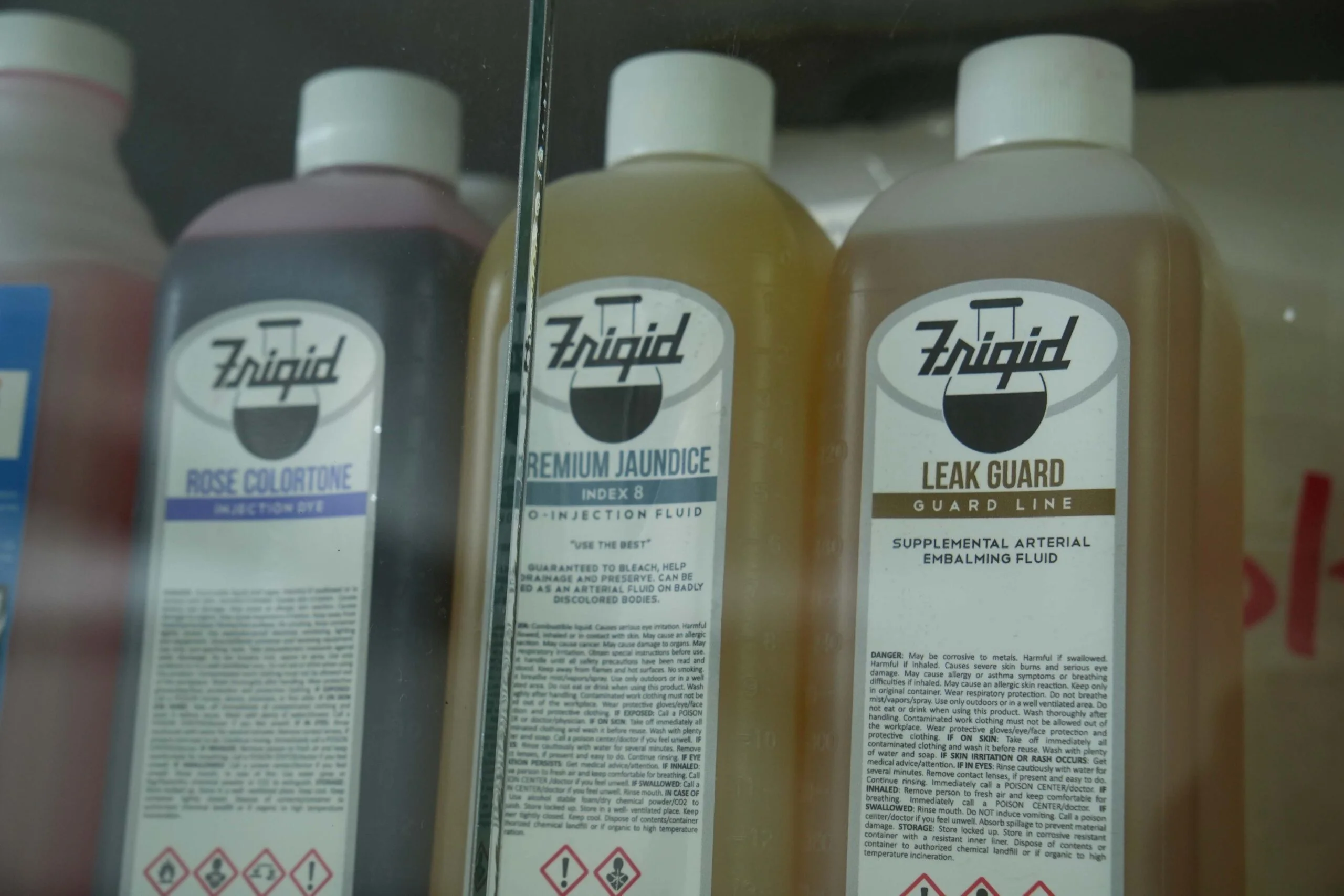
Many funeral homes use formalin, an inexpensive formaldehyde solution. Some providers offer “soft embalming,” which uses other chemicals to create a more natural appearance, but those products can cost about 20 times more. Ovejera put the price of a 200-liter drum of formalin at P11,000 to P15,000.
Local customs and weather also shape the choice. Filipino wakes commonly continue around the clock for days and sometimes weeks. In humid conditions, Ovejera said, softer chemicals may not preserve a body for as long. As a result, more technical and expensive methods are generally available only at selected funeral homes.
Pay, safety and representation lag behind
Embalming is essential to funeral services, but Cribello said compensation has not kept pace with related professions such as nursing and medicine. Entry-level salaries remain around the regional minimum wage, ranging from P401 to P755 a day, according to PCAS and PEAP. Embalmers receive no hazard pay, despite regular exposure to chemicals such as formaldehyde, which the International Agency for Research on Cancer classifies as a Group 1 carcinogen.
The 2010 rules established minimum wage as the starting point, Ovejera said. Smaller funeral homes, however, may pay by the body, leaving some embalmers to freelance across several businesses. Ovejera said changes to pay rules would require legislation.
Representation within the licensing system is another gap. The DOH-CEUE has five members: a chairperson, vice chairperson, sanitary engineer, pathologist and legal officer. The rules do not provide for an embalmer to sit on the committee, although licensed practitioners serve as assessors during oral and practical exams. Nurses, by comparison, make up the board that licenses nurses.
Embalmers formed PEAP in 2018 to give practitioners a collective voice. Until then, the Philippine Mortuary Association represented funeral home owners, but embalmers had no equivalent professional body of their own.
Unclear workforce numbers complicate planning
The size of the licensed workforce is difficult to establish. The DOH-CEUE has not formally released updated figures in recent years, PCAS said. PEAP recorded about 5,000 licensed embalmers in 2018, a count that included people who had died, moved abroad or allowed their licenses to lapse.
Licensing exams were suspended during the COVID-19 pandemic in 2020 and 2021. Since they resumed, each exam has licensed roughly 100 people, putting the total at an estimated 6,000 to 6,300, according to PEAP. PCAS estimates that 200 to 300 new embalmers enter the profession each year.
In March 2026, 75 candidates earned licenses. After the September 2026 written exam, 125 advanced to the oral and practical stages. These snapshots offer some indication of the pipeline, but they do not resolve the larger question of how many licensed practitioners are actively working in the country.
That information matters as employers in Singapore, Malaysia, the Middle East, Europe and North America seek Filipino embalmers. Without an accurate workforce count, Ovejera said, the industry cannot tell whether domestic staffing needs are being met. The figures also omit people who embalm without a license, a practice that several practitioners said persists, especially in provinces where formal training is hard to reach.
Professional growth starts with care
Cribello describes embalming as “the ultimate noble cause.” In class, he emphasizes hygiene and consideration for grieving families alongside business practices for future funeral operators. The work can be difficult and tiring, he said, but teaching gives him a way to influence students and practitioners across the country.
For Ovejera, the work became more personal when his father died in 2023. He helped embalm him, wanting to ensure the family did the best it could. He said the image of a loved one in a casket can remain in a family’s memory, underscoring the weight of the work for those who provide it.
PEAP has explored adding embalming courses to more Philippine universities, Ovejera said. For now, training remains a short certificate program rather than a degree. The profession has expanded its classes and built a collective voice, but its next steps will depend on better workforce data, clearer career pathways and recognition of the demands placed on practitioners.


