For Philippine businesses trying to hold on to customers, keeping prices steady may matter more than adding discounts or delivery perks. An October study by Organic Intelligence found that 27% of respondents would feel a brand was on their side if it froze prices. Smaller tingi packs ranked next at 16%, followed by free shipping at 14% and promotional bundles at 12%.
The message carries weight because many households have little room to absorb another price increase. In a May survey of 800 urban Filipinos, 42% said they had borrowed to cover essentials such as food and transportation. Another 45% said inflation had worn down their motivation to get ahead. Researchers told Rappler that a price freeze campaign could build loyalty among consumers focused on value.

READ: The urban Filipino is tired, cash-strapped, and sick of the ‘resilience’ excuse
Household pressure meets higher business costs
Companies face a difficult calculation: customers are stretched, while the cost of imported goods and other inputs is rising. Philippine inflation reached 7.2% in September, and further acceleration was expected with the October figures due on November 5.
The peso closed at a record low of P64.17 to the dollar on October 27, five days after the Bangko Sentral ng Pilipinas (BSP) raised its policy rate by 50 basis points to 5.50%. It was the fourth consecutive rate increase this year. The BSP also lifted its 2027 inflation forecast from 5.4% to 6%, suggesting companies may face higher costs and weaker purchasing power for longer.
Governor Eli Remolona Jr. said the central bank would largely allow the peso to find its own level, stepping in to smooth excessive swings that could fuel inflation. Former BSP deputy governor Diwa Guinigundo has cited weak capital flows, a balance of payments deficit, low foreign investment and investor uncertainty linked to corruption allegations and the ongoing impeachment trial as factors weighing on the currency.
Dollar demand keeps pressure on the peso
The external accounts show why currency pressure may persist. The Philippines posted a $9.1-billion balance of payments deficit in the first nine months of 2026, up from $5.3 billion a year earlier. Foreign portfolio investments recorded $4.25 billion in net outflows from January to August, reversing $4.58 billion in inflows over the same period last year.
- Imports of mineral fuels and related products rose by $2.56 billion year over year in the first half of 2026, adding to demand for dollars.
- The BSP projects an $8.5-billion balance of payments deficit and a $19.4-billion current account deficit in 2027.
- Foreign exchange reserves fell from $104.8 billion in August to $99.5 billion in September, partly because of BSP foreign exchange operations, valuation changes and government withdrawals. The reserve stock still covered 6.2 months of imports.
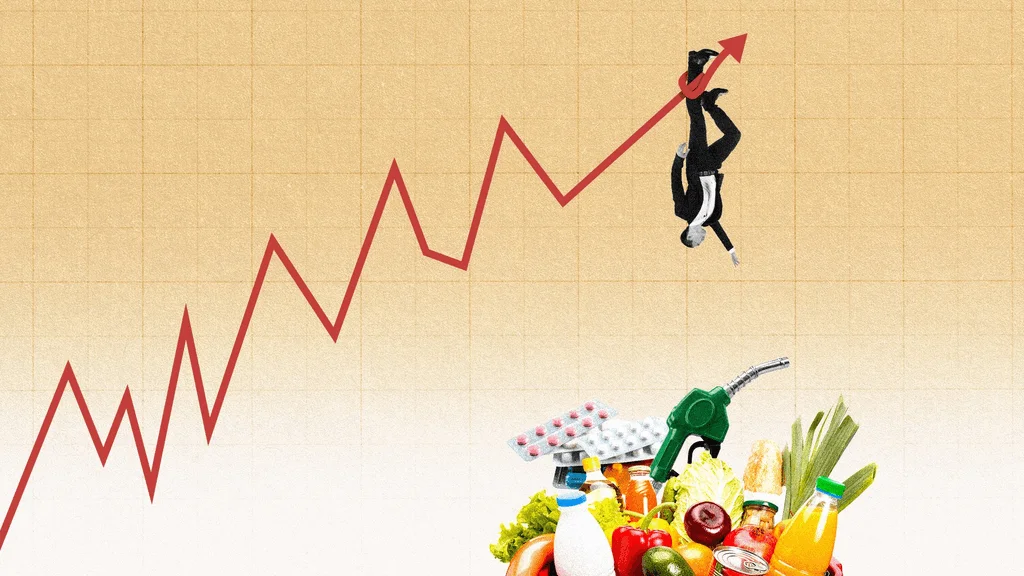
READ: [READOUT] What a stickier inflation wave could mean for businesses
Currency exposure will separate winners and losers
A weaker peso raises costs for import-dependent manufacturers, retailers and airlines, as well as companies with dollar debt that hasn’t been hedged. Exporters and business process outsourcing firms that earn dollars but pay many expenses in pesos could gain from the exchange rate. Higher interest rates add another strain by making new loans and refinancing more expensive.
Bank of the Philippine Islands lead economist Emilio Neri Jr. sees prolonged inflation as a bigger threat to growth than higher rates, given that household consumption accounts for about 70% of the economy. The next key indicator is the third-quarter 2026 GDP release, scheduled for November 9, after growth slowed to 2.3% in the second quarter.
Companies are still pursuing capital despite the pressure. Mynt, the parent company of GCash, completed the largest IPO in Philippine history on October 20. The Philippine Stock Exchange reported a P60.9-billion offering, including the overallotment. Cebu-based Aznar Shipping is preparing an IPO of up to P737 million, with a December 18 listing targeted to fund fleet and shipyard expansion.
For consumer-facing firms, the survey offers a direct strategic signal: customers notice when brands help protect their budgets. Whether a price freeze is sustainable will depend on each company’s costs, but the pressure on household spending makes value a central consideration.
Readout is a content series from data consultancy The Nerve, examining business shifts across Philippine industries through reporting and data analysis.


