A familiar voice, carried forward
Eric Bauza helped carry the voices of Looney Tunes into a new era, performing Bugs Bunny, Daffy Duck and a roster of the franchise’s best-known characters. The Filipino-Canadian voice actor died suddenly on Sunday, October 25, at 46, his family announced in an Instagram post. His death marks the loss of a performer whose work was closely tied to characters that audiences have known for generations. That kind of handoff is demanding: viewers bring strong memories of familiar voices, and a replacement has to make a character recognizable while still delivering a performance of their own.
A defining voice across animation
Born in Scarborough, Ontario, on December 7, 1979, Bauza grew up imitating the Looney Tunes characters he watched. He later took on roles voiced by Mel Blanc, including Bugs Bunny, Daffy Duck, Tweety, Porky Pig, Elmer Fudd, Foghorn Leghorn and Road Runner. The list shows the breadth of the assignment: these aren’t interchangeable comic voices, but characters with distinct rhythms, attitudes and ways of landing a joke. For an audience, a convincing performance can make a new recording feel continuous with an older favorite. For the actor, that continuity takes close attention to the character’s established identity.
His credits extended well beyond the Warner Bros. franchise. Across more than 25 years and over 400 acting roles, he worked in film, television and video games, with titles including The Adventures of Puss in Boots, Teen Titans Go!, Ben 10, Space Jam: A New Legacy and The Super Mario Bros. Movie. He received three Children’s and Family Emmy Awards for voice performance between 2022 and 2025. The range matters because it places his work in more than one generation of animation and across several kinds of entertainment. Voice acting can be easy to overlook when a performer isn’t visible on screen; the characters, however, can remain part of a viewer’s daily media for years. Bauza’s credits suggest a career built on that sustained presence.
His final screen role
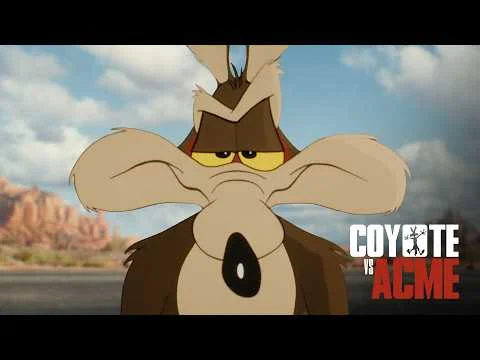
Bauza voiced Wile E. Coyote in Dave Green’s comedy Coyote vs. Acme, which premiered in August 2026. He also posted about the film on X. The role connects his final screen work to the same animated world that shaped much of his public profile, though Wile E. Coyote is a different kind of performance from the verbal, quick-fire characters he voiced elsewhere. The film’s mention also gives this story a specific point of reference for audiences encountering his work after his death: a performance attached to a title that had recently premiered.
In a 2021 interview with NBC News, Bauza described the appeal of the franchise: “Looney Tunes transcends all languages and all cultures. It doesn’t matter what part of the planet you’re from. You get the comedy.” His comment points to the unusual durability of these characters: the humor depends less on a viewer knowing a particular place or tradition than on timing, expression and physical comedy. That doesn’t make the work effortless. A performer still has to shape a voice that feels specific enough to belong to a character and familiar enough to fit an existing audience’s expectations.
Warner Bros. Television Group chair Channing Dungey, in a statement reported by The Hollywood Reporter, said Bauza brought “joy and laughter to millions around the world.” Dungey also recognized his 15 years with Warner Bros. animation and his place in a line of performers that included Blanc. His work leaves a substantial archive of familiar characters for audiences to revisit. For a studio, that archive is a catalogue of performances; for viewers, it can be a record of how beloved characters sounded across different eras. Bauza’s contribution will be heard in that continuing body of work, even as the person behind the voices is gone.
What his career leaves behind
There’s a tendency to describe voice actors through the characters they play, as if the performer disappears into the role. Bauza’s career shows the scale of the work behind that impression: hundreds of acting credits, varied formats and a sustained connection to a major animation franchise. This is more significant than it looks. Familiar characters don’t stay familiar by accident; performers help carry them across new productions and audiences.
If you’re working in animation, Bauza’s career is a reminder that continuity depends on performance as much as on design or writing. The voice has to support the character without calling too much attention to the act of imitation. A long list of credits can measure a career’s reach, but it can’t fully capture that craft. The voices remain.
Neo Croox is a Rappler intern taking up journalism at the University of Santo Tomas.


