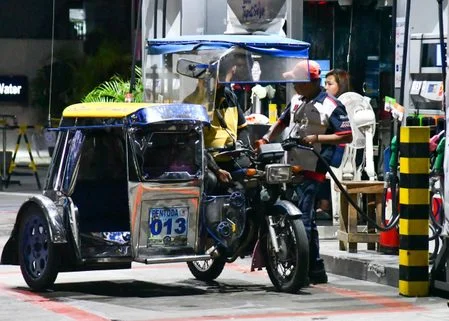
The proposed Public Transport Modernization Program (PTMP) has united three transport groups in Negros Occidental and Bacolod City, which say the plan could threaten the livelihoods of more than 3,000 traditional jeepney operators and drivers. Their objections center on its cost, its effects on existing routes and the limited information presented about how the program would work.
The Bacolod Alliance of Commuters Operators and Drivers in Negros Island–Samahang Manibela, Mananakay at Nagkakaisang Termina ng Transportasyon (BACODNO-MANIBELA), Kabakod Negros Transport Coalition (KNETCO) and United Drivers and Operators Center–Pinakaisang Samahan ng mga Tsuper at Operator Nationwide (UNDOC-PISTON) have joined forces in opposition. They staged a walkout during a World Bank–Department of Transportation (DOTr) dialogue at Seda Hotel-Bacolod on Thursday, October 22, followed by a protest outside the venue. They also protested as a five-day Electric Vehicle Summit opened at Ayala Malls Capitol Central on Monday, October 26.
The groups describe the dialogue as staged to win their support. Their alliance marks a shift from the fragmentation that had characterized transport groups in the province and Bacolod. They say the proposed program left them little choice but to organize together.
A new program with familiar concerns
PTMP is a rebranded version of the Public Utility Vehicle Modernization Program (PUVMP), introduced nine years ago under DOTr Department Order No. 2017-011. The original program has relied on loans from the Landbank of the Philippines and the Development Bank of the Philippines. The source article puts the program’s debt at about P5 billion.
The PUVMP called for traditional jeepneys to be phased out gradually and replaced by modern units with Euro 4-compliant engines. With each new vehicle costing more than P2 million, operators had to form cooperatives to apply for financing from the two state-owned banks.
That financing model has left local operators facing serious pressure. Eight of the 11 cooperatives under the Bacolod Modernized Jeepney Transport Association are experiencing significant problems, and 329 of the association’s modernized units risk repossession by Landbank or the Development Bank.
Under the proposed PTMP, the World Bank would extend loans to established transport companies and corporations with strong performance records, rather than to cooperatives. The plan would also replace standard Euro 4 engines with Euro 4L units and, according to the groups’ understanding, substitute one modern jeepney for every three traditional ones.
Once remaining obstacles are resolved, the DOTr plans to pilot the program in Bacolod, Iloilo, Cebu, Baguio and General Santos, as well as the National Capital Region.
Questions about cost, evidence and route impact
At a press conference on October 26, BACODNO-MANIBELA president Rudy Catedral argued that the new name and financing arrangement don’t change the program’s purpose. “It is the same intention, but this time, the DOTr is just masquerading as the World Bank to cover up its failed PUVMP,” he said. Catedral warned that PTMP would “wipe us all out” and “kill” them all.
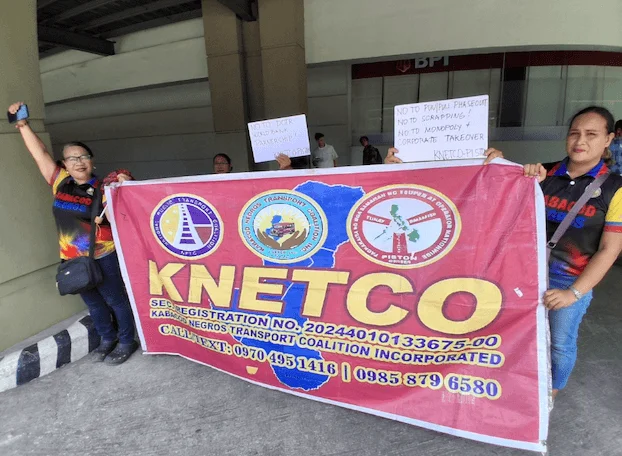
KNETCO president Lilian Sembrano says a broad rollout would be premature without evidence that modernized vehicles—whether Euro 4L-compliant or electric—can meet expectations for capacity, reliability and long-term operation. She proposed a one-year pilot in areas without transport service entities, so the performance of World Bank-funded electric vehicles could be assessed before they are introduced on routes already served by existing entities. Mixing the two, she argued, could add complexity.
Sembrano also questioned whether operators can afford the proposed vehicles, which she put at P3 million to P4 million each. She urged Bacolod Mayor Greg Gasataya to intervene in negotiations between the World Bank and the DOTr and asked whether operators could focus on rehabilitating existing vehicles first. She said no feasibility study for PTMP had been presented, raising fears of repeating problems associated with the PUVMP.
Dispute over what happens to traditional jeepneys
One of Sembrano’s sharpest concerns is the possibility that traditional jeepneys could be taken to a designated scrapping center and destroyed. She described the vehicles as treasured assets and said the prospect of seeing them junked or shredded was painful. Sembrano also said the groups intend to challenge the modernization program legally, arguing that it rests on a department order rather than a law. “We will fight for our rights. We will fight for our families,” she said.
UNDOC-PISTON president Rodolfo Gardoce Jr. said his group may call a mass “untat byahe” (stop the trip) if the World Bank–DOTr plan proceeds.
Gerry Llena, the Land Transportation Franchising and Regulatory Board regional director for Negros Island, told Rappler he had yet to hear both sides. He rejected the claim that three traditional jeepneys would be scrapped for every modern unit, calling it a myth. The agency follows the Local Public Transport Route Plan, he said, and cannot simply scrap vehicles without risking a larger transport shortage.
That dispute points to the test facing the pilot: whether officials can show that the financing, vehicle supply and route plans work for operators and passengers before the program expands.