The burial of a dead sperm whale at Turners Beach has left local residents seeking clearer answers about risks to swimmers and the environment. Tasmania’s Parks and Wildlife Service says the selected site was the most suitable option after weighing public amenity and environmental considerations. That explanation addresses the choice in broad terms, but it hasn’t settled the questions people living nearby want answered: what risks were considered, how the site will be checked, and what would prompt a response.
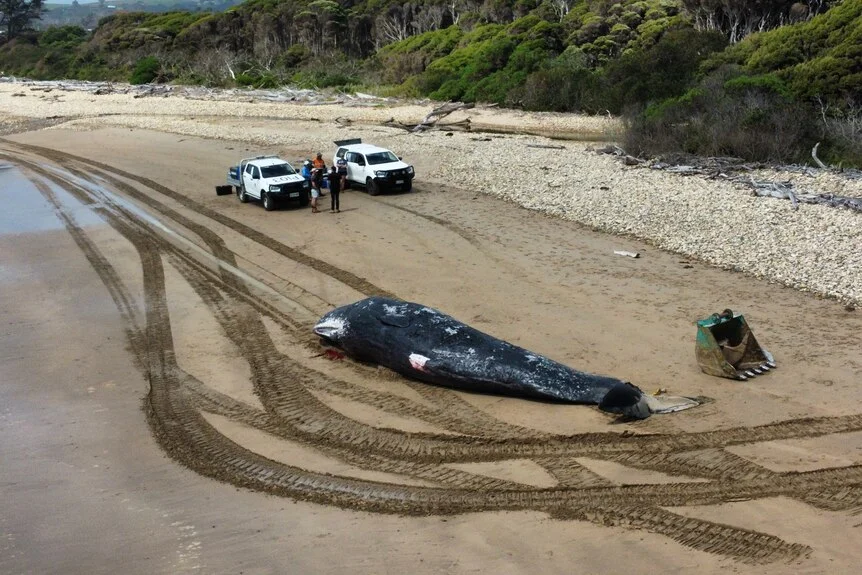
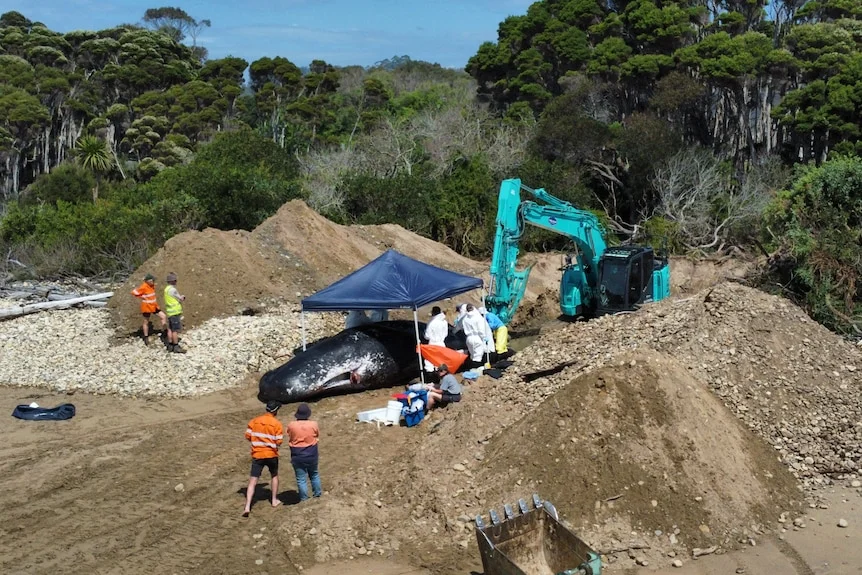
The 10-metre whale became stranded in shallow water on Wednesday night. Wildlife staff spent much of Thursday trying to save it, but it died later that day. The carcass was buried the following day in vegetation at the beach’s western end, and samples were collected for further research. The sequence shows how quickly decisions can have to be made during a stranding, when staff are dealing with a large animal and a changing situation at the shore.
Once a whale has died, authorities must manage both the carcass and the public space around it. Leaving a large animal on a beach can affect people’s use of the area as it decomposes; moving it elsewhere brings practical and environmental questions of its own. The service says the burial site was selected after those considerations were weighed. Residents, however, are asking for enough detail to understand how that assessment relates to a beach they use.
Parks and Wildlife staff conducted the burial and sample collection. (Supplied)
Residents question proximity to swimming areas
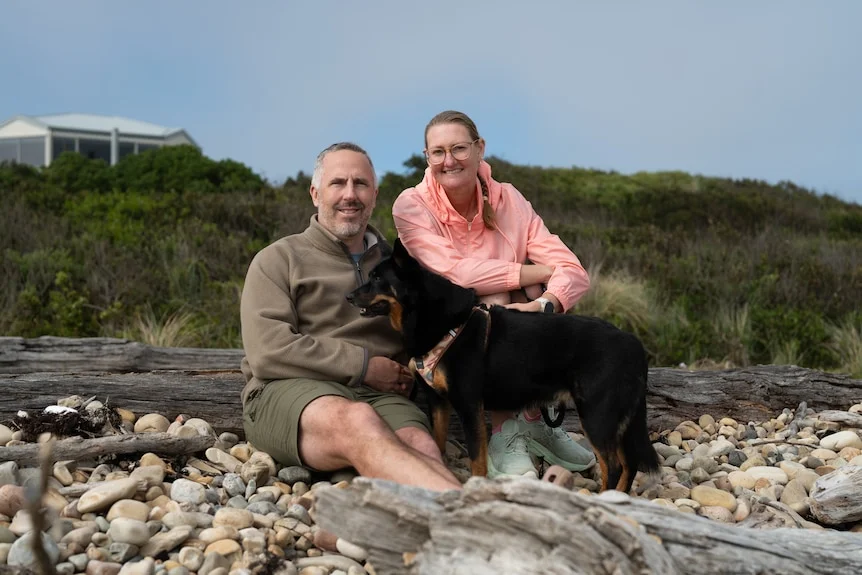
For Turners Beach resident Greg Tompos, the location is the immediate concern. He said the burial site is a few hundred metres from Camp Clayton, where children’s groups swim, and near the stretch of beach where his own children go swimming. The distance matters to residents because the site sits within a familiar recreational area, rather than somewhere remote from daily beach use.
That proximity doesn’t establish that swimmers face a hazard, but it makes clear communication more important. People want to know what authorities expect to happen as the carcass decomposes and whether there are signs that would lead staff to inspect or change their approach. Without that information, uncertainty can become a concern in its own right.
Greg Tompos says he is concerned about the whale being buried near a popular swimming location. (ABC News: Mackenzie Heard)
Residents have also raised concerns about the carcass decomposing, including the possibility of toxins entering the water or sharks being attracted to the area. Those are community concerns, not reported findings about conditions at the site. Kate Wylie, a local resident and candidate standing for re-election as a Central Coast councillor, said she had passed community concerns to authorities. She said residents had received limited information about how the burial decision was made, while acknowledging they had to trust the experts handling the carcass.
Here’s the thing: trust is easier to maintain when people can see how a decision was reached and what happens next. A clear account of monitoring can help distinguish questions that are being checked from claims that remain unverified. That’s especially relevant where beach users have no direct way to assess a buried carcass or its effects.
Authorities defend the choice and plan monitoring
A Parks and Wildlife Service spokesperson said the decision followed consultation with landholders and authorities, including councils and the Environment Protection Authority. The service said burying the whale at the chosen location was preferable, for environmental and public amenity reasons, to leaving it on the beach or allowing it to decompose there. The explanation points to a comparison between possible options, though residents say they have heard little about the reasoning behind the final choice.
For the public, the difference between a decision being reviewed by authorities and a decision being explained to the community is practical. People don’t need every technical detail to understand the basic reasoning, but they do need to know what monitoring means in this case and how concerns will be handled. A plan that is visible and responsive can make official assurances more meaningful.
Samples were taken by scientists for further testing. (Supplied)
Monitoring will shape the community’s response
Taking the carcass out to sea was considered, Wylie said, but she understood that whales can wash back ashore elsewhere. That possibility illustrates why disposal choices can be difficult: moving a carcass may shift the problem rather than resolve it. The Parks and Wildlife Service said it would monitor the burial site and respond to any problems.
This is more significant than it looks. Monitoring is the point at which the service’s explanation meets residents’ lived experience: it can show whether the site remains as expected and give authorities a basis for responding if conditions change. The available information doesn’t specify how often checks will occur or what would count as a problem, leaving those questions open for the community.
If you’re working in this space, the lesson is familiar: sound field decisions still need clear public communication, especially when they affect places people use. The samples collected for further research may add information about the whale, while monitoring is intended to address the burial site itself. Two different questions. For residents, the next test will be whether checks produce timely answers—and whether future strandings are handled with clearer communication from the outset.


