Queensland’s e-mobility market is far larger than earlier crash and enforcement data could show, and its compliance picture depends on which devices are counted. A government-funded survey estimates close to one million privately owned devices across the state; about half were reported as non-compliant.
The first Australian study to estimate private ownership drew 3,464 responses gathered from March to May through online platforms and a postcard sent to households. Transport and Main Roads funded the research. University of Queensland researcher Dr Richard Buning said the team assessed compliance using owners’ accounts of speed, motor power and throttle features.
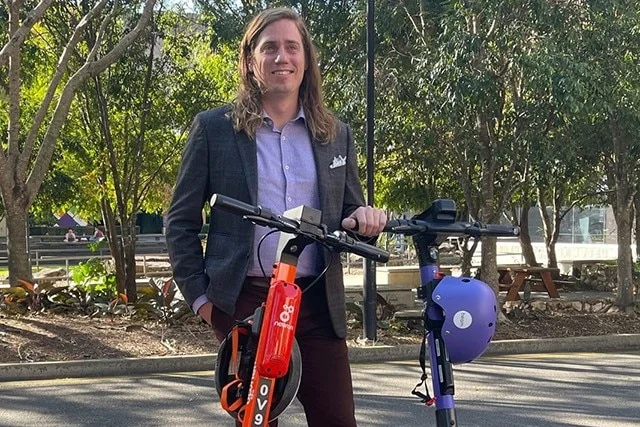
Dr Richard Buning said it was important to educate riders. (Supplied: UQ)
Compliance varies by device
E-bikes account for an estimated 587,000 devices. Of those, 65 per cent were reported as compliant, compared with 45 per cent of other electric devices, including e-skateboards and e-unicycles. Across the sample, owners most often cited a top speed above 25 kilometres per hour, followed by motor output above 250 watts.
Queensland University of Technology researcher Professor Narelle Haworth, who did not take part in the study, called the reported level of non-compliance “scary.” She said the result pointed to a “big problem,” while cautioning that a device classified as non-compliant in the survey wasn’t necessarily being used in a non-compliant way.
Queensland permits devices that don’t meet required standards to be sold for use on private property. Retailers must not mislead buyers about where those devices can be used. New requirements due to take effect in March next year will require e-bikes to meet European Standard EN 15194 or pass the state’s assurance scheme, with a sticker showing compliance.

Queensland University of Technology Professor Narelle Haworth. (ABC News: Tobi Loftus)
Haworth said further research should establish whether buyers knew a device didn’t meet the rules when they purchased it. That distinction could help shape how the state responds. Since new laws came into effect in July, Queensland police have seized 600 e-bikes that fail the European standard; Police Minister Dan Purdie said the “majority” had been destroyed.
Compliance is harder to assess for e-scooters because strict specifications are lacking, Buning said. He also described uncertainty about whether owners knowingly bought devices that were unsafe or unsuitable for public roads. “It is hard to know how many people bought an unsafe, uncompliant device and knew that it was,” he said.
Ownership spans generations
The survey challenges the idea that e-mobility is mainly a young person’s pursuit. One-third of e-bike riders are over 60, while the average e-scooter owner is 37. More than 98 per cent of owners said they wear a helmet.
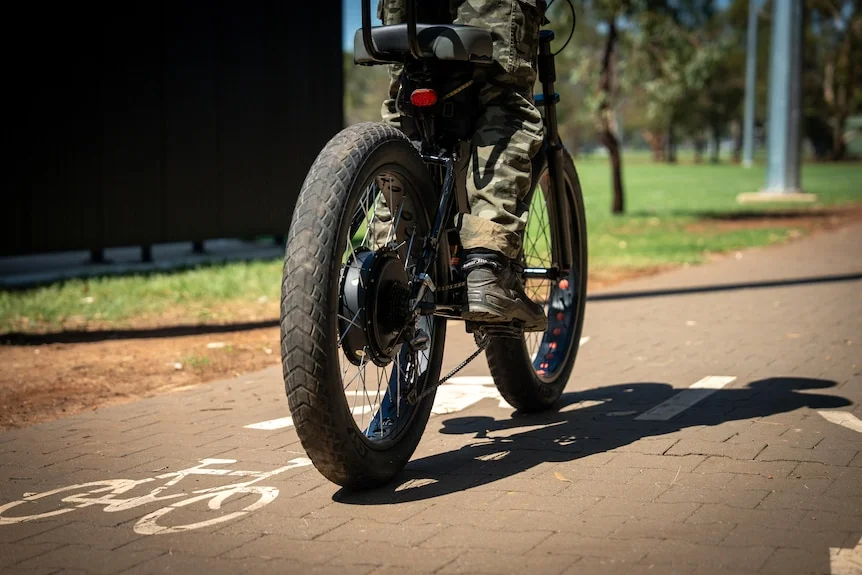
The survey found a third of e-bike users are over 60 years old. (ABC News: Ashlin Blieshke)
“The majority isn't young people using them doing bad things,” Buning said. “The majority is actually older people wanting to stay active and stay part of their community.” He said conspicuous unsafe riding can skew public perceptions of the devices and argued riders need clear guidance at purchase about where and how they can ride.
RACQ public policy executive manager Michael Kane welcomed the research, saying a better understanding of the transport ecosystem could help improve it. He said new transport technologies bring benefits and drawbacks, requiring support for positive outcomes alongside action on problems.
A Transport and Main Roads spokesperson said the state had introduced stronger laws and enforcement since the research was conducted, alongside education for riders, parents, schools and retailers. The survey’s central contribution is a clearer estimate of who owns these devices and how common they are; the next challenge is translating self-reported compliance into guidance that buyers and riders can act on.


