Alongside the initiatives aimed at bolstering the Philippines’ infrastructure under the Duterte administration, the Development Bank of the Philippines (DBP) has come under fire for its management of the Infrastructure Contractor Support (ICONS) program. According to recent findings by state auditors, the institution has amassed over P4 billion in overdue loans — 61.4% of the total P6.67 billion still owed under this program. This situation raises serious questions about the efficacy of DBP's lending protocols.
ICONS: Intended Purpose and Functionality
The ICONS program was launched in 2017 to assist contractors involved in significant infrastructure projects, including public-private partnerships. The objective was simple: allow contractors to borrow against anticipated payments from government contracts, effectively bridging the gap between the costs of construction and receipt of payments. For this model to work successfully, it was imperative for DBP to ensure that loans were granted based on verified construction progress.
However, the Commission on Audit (COA) reported that due diligence often fell short, with instances of loans disbursed without adequate verification of work. According to DBP’s own guidelines, funds were to be released in stages, contingent on site inspections. Unfortunately, these measures were frequently bypassed.
Case Study: The P300 Million Loan Debacle
A striking example of these shortcomings can be seen in a P300 million loan administered to a contractor engaged in five projects for a government-owned corporation. Approved in August 2019, the entire credit line was drawn by March 2020 based on reported project progressions. The contractor portrayed their projects as advancing well, claiming over 75% completion on the two largest contracts.
Despite these assurances, DBP failed to confirm actual advancements before releasing the funds. Auditors discovered that reliance on projected payment values without thorough verification led to significant discrepancies. Within a brief span of three months, the contractor was already defaulting on payments.
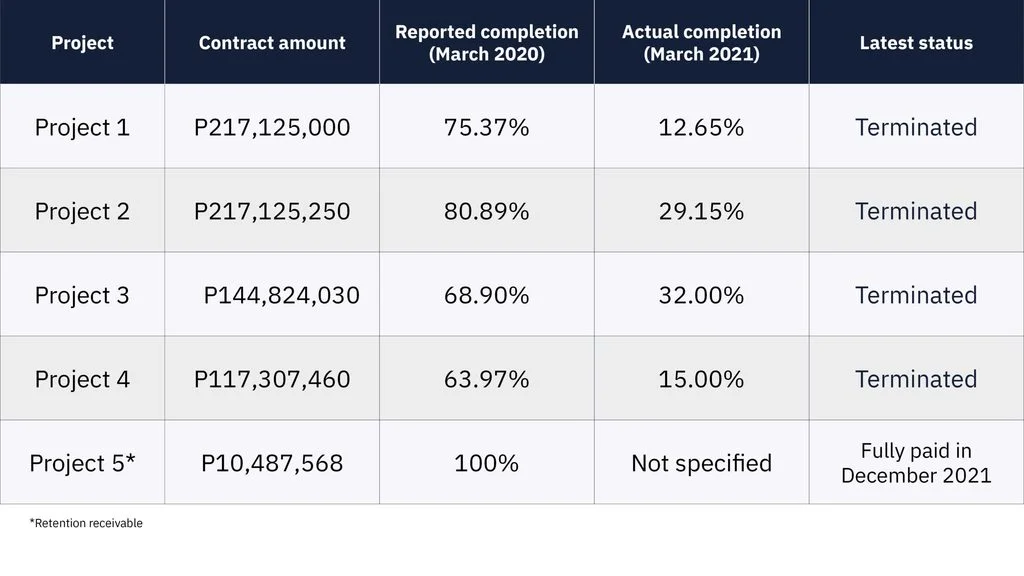
DBP did not initiate a check on construction progress until March 2021, a year after the loan was fully disbursed, leading to the revelation that two projects faced termination due to significant delays. As of December 31, 2025, no principal repayments had been made on the loan, with DBP forced to consider the entire amount as a loss.
Subcontracting and Collections Challenges
The failings witnessed in the P300 million loan were not isolated. Another contractor remained liable for P490.46 million in overdue payments at the end of 2025, despite the completion of associated projects. This contractor had largely subcontracted work, leaving them with negligible financial exposure, averaging just 3.5% of the total project costs.
Despite the projects’ completions occurring from 2017 to 2021, the contractor continued to seek loan extensions rather than settle outstanding debts. COA’s investigation flagged the absence of accountability regarding what happened to payments resulting from these completed projects.
Delayed actions concerning repayment attempts emerged as a further issue. A borrower that defaulted in June 2021 received its first demand notice four years later. By December 2025, this borrower still had an outstanding balance of P97.24 million, while the case had cycled through six different bank officers.
DBP's Responses and Future Outlook
In light of these audit findings, COA recommended a thorough investigation into possible negligence among bank personnel involved with ICONS. Immediate action is urged to expedite recovery of outstanding loans, particularly from viable borrowers who still operate or have real estate collateral. DBP’s management committee did state it would look into potential negligence regarding the loans.
However, IDB’s response to the ongoing concerns surrounding its lapsing loans has been slow. The inquiry into its largest nonperforming loans began in early 2022, yet the decision to terminate the ICONS program did not come until June 2026, illustrating a troubling lag in addressing and rectifying such systemic issues.
DBP’s difficulties with overdue loans extend beyond ICONS. The gross nonperforming loan ratio spiked from 7.05% to 9.52% within a span of months this year, raising ongoing concerns about the overall credit health of the institution.
Questions remain regarding the specifics of the overdue amounts and how they are contributing to DBP’s financial standing. As of now, the bank has refrained from providing concrete updates on recovery efforts or insights into the lengthy investigation process surrounding its loan management practices. Such lack of transparency could hamper confidence in DBP's future operations and credit management.