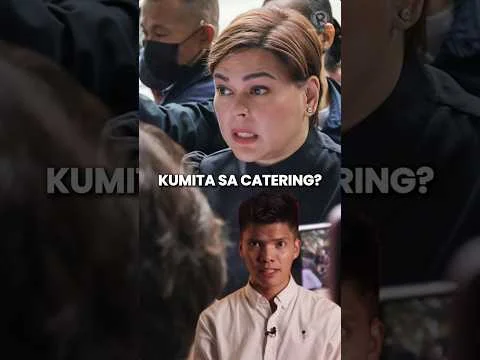
As Vice President Sara Duterte navigates her ongoing impeachment trial, indications suggest that her family is already strategizing for their political future. This situation raises questions not only about the verdict at hand but also about the Duterte family's long-term political strategy. Given the stakes involved, the implications of this trial extend well beyond the immediate courtroom drama.
Political Consequences of Impeachment
If Duterte faces conviction in her current trial, she could be forced out of office and prohibited from contending in the presidential race of 2028. This isn’t just a legal issue; it could effectively dismantle the family's grip on power in the Philippines. Given this possibility, it seems logical for her and her family to proactively assess their options. History has shown how swiftly political fortunes can shift in this region — one moment you’re at the top, and the next, the landscape can change drastically.
In the backdrop of this impeachment trial, the potential for political exile looms large. The Duterte family has built its dynasty on a platform of populism and authority, often employing a mix of charisma and hardline tactics. The current situation presents a unique set of challenges, not only from political opponents but also from a disillusioned electorate that may be growing weary of dynastic politics. The idea that the family needs to prepare for a post-Sara environment demonstrates an acute awareness of the precariousness of power.
Potential Political Heirs
So, who might carry the Duterte banner forward if Sara cannot? Some observers are looking toward Davao City Mayor Sebastian “Baste” Duterte, her younger brother. He’s not an unfamiliar face for the Duterte base; his profile has steadily been rising within local and national circles. His recent activities, such as testifying during Sara's trial, suggest he’s being groomed for something larger. Political families often rely on brand familiarity, and Baste already has that, even if he hasn’t shown a clear willingness to run yet.
In a press conference on October 6, Duterte noted, “Hindi namin napag-usapan ni Mayor Sebastian Duterte ang pagtakbo niya bilang pangulo” (We haven’t discussed him running for president). This response leaves room for interpretation: Is it a strategic avoidance of speculation, or does it reflect internal uncertainty? Either way, the ramifications for any potential candidacy hinge on whether Sara can weather the storm of her impeachment.
Baste has held Davao City’s mayoralty since 2022, inheriting the role from Sara, who transitioned to the vice presidency. Historically, the Duterte family has maintained a stronghold in Davao City, with a lineage that stretches back nearly four decades. This legacy isn’t merely familial; it’s been cultivated through a combination of local governance and populist policies. The repeated retention of power indicates a deeply embedded political machine that may well function irrespective of Sara's current legal troubles.
Matter of Timing and Strategy
Interestingly, their mother, Elizabeth Zimmerman, appears to be playing a significant role in shaping future plans. Sara relayed a conversation where her mother suggested, “Come back to Davao City and let Baste handle the national election.” It’s a telling remark that reflects both a familial bond and a strategic pivot in the face of uncertainty. Should the political tide turn against Sara, Baste stepping into a national role could be a calculated move designed to preserve the family’s influence.
Per the 1987 Constitution, specific qualifications must be met to run for president. Some of these hurdle points are straightforward: a candidate must be a natural-born Filipino citizen and at least 40 years old on election day. Looking at Baste, as of now, he meets these requirements and will turn 40 by May 2028. However, ambitions and qualifications aren’t the same thing—his decision will likely be shaped by Sara’s political fate.
Some might argue the timing couldn’t be worse for the Duterte family, with political tensions mounting. Recent developments indicate that the electorate's mood could sour, especially in light of ongoing controversies and corruption allegations tied to the family. Families like the Dutertes thrive on the loyalty of their base, but cracks in that loyalty can quickly lead to broader electoral challenges.
Future Implications
If you're working in this space, you realize that the political dynamics are shifting. The Duterte brand has always been synonymous with a specific style of governance, but Sara's current situation might be signaling a turning point. The potential rise of Baste doesn’t merely represent the next in line but rather the evolution of the family’s political narrative.
This all comes at a time when the political climate in the Philippines is increasingly competitive. Traditional loyalties could waver, pushing people to reconsider where their allegiances lie. The way the Duterte family manages this will be significant, as they need to adapt or risk being left behind. Baste’s potential candidacy can be seen as a contingency plan, but this is murky territory. Political dynasties often grapple with the weight of inherited expectations, and this time could be no different.
Reflecting on her own experiences, Duterte emphasized, “Running must be a personal decision. It's a tough job, and campaigning is no easy feat.” And yet, her words also reveal an underlying complexity—being part of a political family doesn’t always equate to a straightforward path forward.
In essence, the situation remains fluid. The next steps will either reinforce the Duterte family's legacy or unveil new challenges that could redefine Philippine politics for years to come.