At the UP College of Law, a striking mural captures stories that extend beyond legal documents.
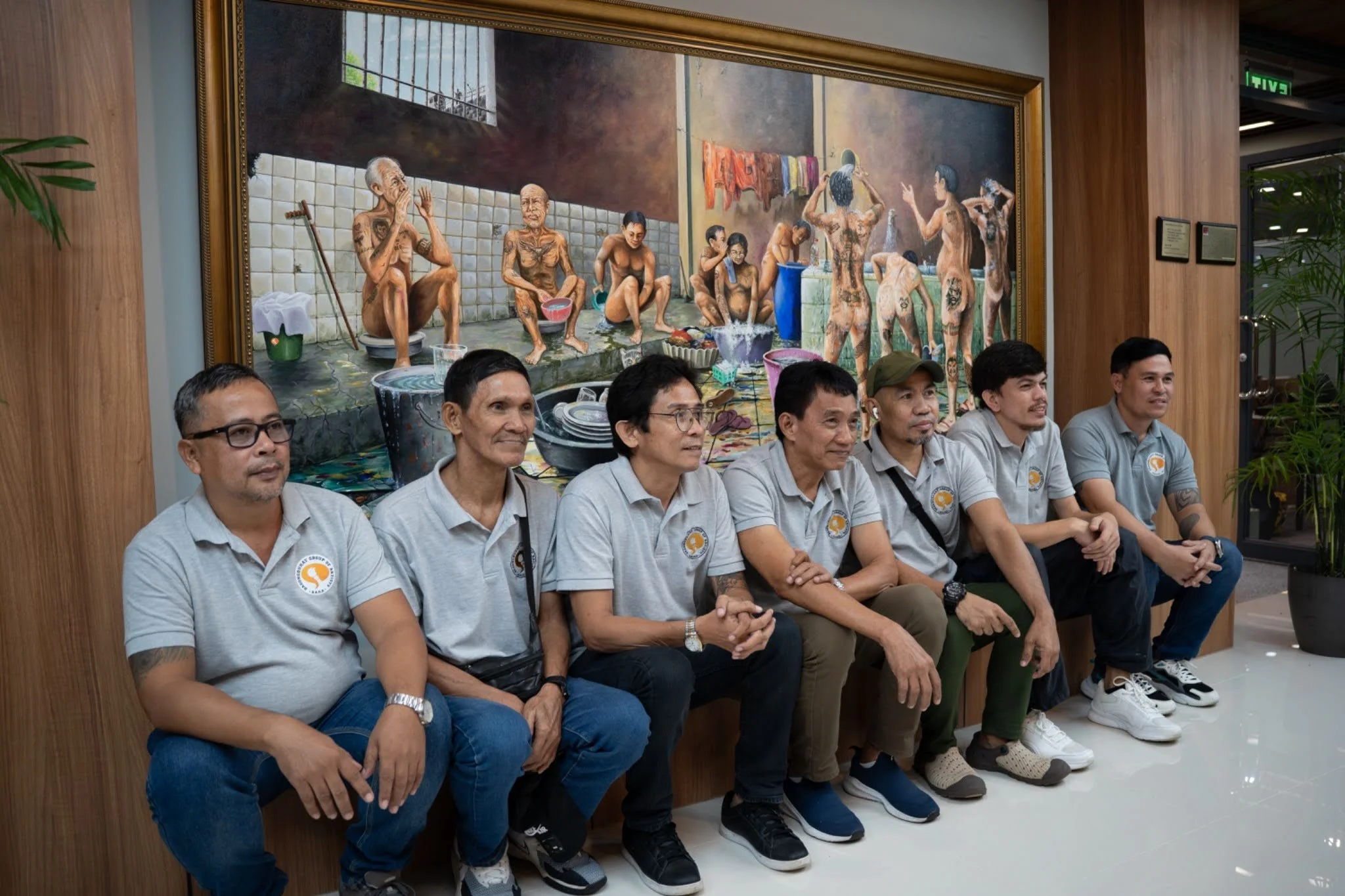
Crafted by the Bagongbuhay Group of Artists (BAGA), a collective of former Persons Deprived of Liberty (PDLs), this artwork embodies the journeys of those who have experienced incarceration and their lives beyond prison walls.
The mural, titled Buyon, was officially unveiled on September 18 during the 25th anniversary celebration of the UP Law Class of 2001. The event also showcased a broader exhibition of works by BAGA, formed in 2021 to unite former PDLs and marginalized communities through artistic expression.
Initially, “buyon” represents a commonplace feature in detention centers where PDLs bathe, wash clothes, and perform daily chores in a confined space. This background gives the mural its poignant context.
Transforming Memories into Art
The mural’s creation kickstarted last year when Joey de Leon, founder and president of BAGA, was contacted by Justice Karl Miranda. The UP Law alumni class sought BAGA's expertise for a mural reflecting the Philippine criminal justice system, aiming to make their legacy memorable.
Having undergone incarceration, de Leon proposed to depict a side of detention that often remains overlooked. He described the “buyon” as a shared facility, integral to daily life within prison walls.
“Ang buyon ay isang facility sa loob ng bawat brigada sa kulungan. Doon kayo naliligo, doon rin kayo naglalaba, doon rin dumudumi,” he explained, emphasizing the harsh realities confined within that space.
Through their artwork, which includes men sharing these cramped quarters—bathing and washing in limited conditions—the mural serves both to highlight the struggle and to foster a sense of community among detainees.
De Leon clarified that their message wasn’t about seeking sympathy or governmental aid. His words resonate with their humanity: “Kami ay pangkaraniwang inmate na naranasan mismo iyon. Pinapakita lang namin, we are humans.”
Rebuilding Lives with Art
Danilo Faustino, a member of BAGA, faced profound challenges after serving two decades in the New Bilibid Prison. The pressing question of what comes next post-incarceration looms large, particularly regarding employment opportunities for those released. For Faustino, art became a pivotal means of navigating life after prison.
“Para paglaya nila, meron silang… panghanapbuhay o diskarte,”
he expressed, advocating that art can provide a pathway for former inmates to sustain themselves.In a personal reflection of justice, Faustino chose to paint Lady Justice, presenting a vision where balance and fairness can thrive. He holds onto hope that justice remains attainable, as he visualizes her blindfolded, symbols of accountability in hand.
He argues that art can also serve as therapy for those inside the bars. BAGA provides creative outlets to help PDLs endure their circumstances.
“Para meron silang mapaglibangan,” he said. “Yung artwork na ’yan, hindi sila ma-homesick sa loob.”
Insights from Inside the Walls
Leo Eroja, another BAGA artist involved in the mural, began creating art during his incarceration in 1996. His work, titled Tree of Life, embodies hope and prosperity, conveying a powerful message in simplistic terms.
He found that painting not only served as a form of self-expression but also a means to survive economically while detained. Eroja explained the reality behind bars, dispelling myths about incarceration and emphasizing the unexpected aspects of prison life, like the existence of educational programs.
“Hindi nila alam na may school din pala doon,” he pointed out, addressing the misunderstanding that those in prison lose all connections to routine and learning.
Bridging Law and Life
For those in the legal profession associated with the mural, Buyon serves as a pivotal reminder. Professor Oliver Xavier Reyes from the UP Law Class of 2001 conveyed his initial reluctance about using art for their project, but expressed satisfaction with what the mural offers.
The mural encapsulates the stakes of legal practice, revealing the profound human lives affected by law beyond textbooks. Reyes notes how significant a detail the barred window is—it symbolizes hope and resilience amidst confinement.
He sees the mural as an invitation for legal practitioners to recognize that their work extends beyond the classroom and into the very lives of those who are marginalized.
A Call for Understanding and Second Chances
Each BAGA artist harbors a singular request: Faustino seeks to equip PDLs with marketable skills, Eroja aims to highlight the ongoing education behind bars, and De Leon emphasizes the necessity for societal trust post-incarceration.
De Leon eloquently stated, “Bigyan niyo kami ng second chance,” urging society to reconsider their perceptions of former inmates and extend opportunities for renewal.
This mural isn't just a piece of art—it's a powerful testament to resilience, hope, and the crucial narrative of human experiences behind the walls of incarceration. The hope is that conversations like these unfold, paving the way for greater empathy and understanding throughout society.


