MANILA, Philippines – As the Philippines marks over five decades since the declaration of Martial Law, progressive groups gathered to emphasize that the legacy of oppression and human rights abuses remains starkly relevant today. On September 21, 2023, various activists, including Senator Risa Hontiveros, called for a reliance on the historical lessons of dictatorship as a guide for current social and political struggles.
Remembering the Victims
Hontiveros underscored the importance of remembering both the victims of Martial Law and those who opposed the regime. She stated, “We shouldn't forget the dark chapter of our history. Now, more than ever, we Filipinos must resist and strive for a more just future.” This sentiment reflects a broader understanding among activists that collective memory plays a critical role in shaping political consciousness and mobilization against repetition of past mistakes.
The remembrance serves not only as a tribute to those who suffered but also as a rallying cry for younger generations. The lessons drawn from that tumultuous period must resonate if the nation is to avoid slipping back into authoritarianism. The challenge remains — can these lessons from the past instill the necessary resolve in today's political landscape?
The August Twenty One Movement reiterated the grim statistics associated with Martial Law, citing an estimated 70,000 illegal arrests, 34,000 cases of torture, and 3,240 deaths. Their statement cautioned that these figures likely underestimate the full extent of the abuses, as many violations went unreported.
Combatting Historical Revisionism
Addressing the ongoing attempts by the Marcos family to downplay their historical role, the group asserted, “The Marcoses have spent decades trying to deodorize what Martial Law was. We name it again.” This opposition to historical revisionism is crucial, especially in a time where misinformation can easily cloud public understanding. There's a distinct risk that the very history of oppression could be politically sanitized, eroding the memories and lessons that fuel current activism.
In 2022, Ferdinand Marcos Jr., the son of the notorious dictator, ascended to the presidency after garnering over 31 million votes, thus reinstating the Marcos clan in Malacañang three decades post-EDSA People Power Revolution. His family's return to power raises questions about public memory and accountability, especially as many younger voters lack firsthand knowledge of the Martial Law period. Educational discourse remains vital in addressing this gap.
The Economic Fallout of the Dictatorship
The Campaign Against the Return of the Marcoses and Martial Law (CARMMA) reflected on the systemic repression and dire economic climate during the dictatorship. This included discussions around the Marcos family's corrupt practices and their impact on national debt levels and economic instability. Economic mismanagement underpins many of the inequalities and grievances that activists argue have persisted long after the regime's fall.
CARMMA poignantly described the treatment of dissenters during that era, explaining how Marcos Sr. vilified activists, resulting in their extrajudicial killings, enforced disappearances, and oppressive imprisonments.
Parallels to Present-Day Issues
As activists draw parallels between past atrocities and today's climate, human rights organization Karapatan highlighted ongoing issues like corruption, red-tagging, and crackdowns on dissenting voices. Christina Palabay, the organization’s secretary general, expressed concern: “The legacy of Martial Law remains because the same atrocities continue, more than five decades after.” The continuity of these patterns suggests that the lessons we could draw from history are often not heeded.
Palabay defended the necessity of protest, emphasizing that history teaches the importance of the right to free expression and the need for accountability from the government. “The government can’t claim to uphold democracy while suppressing dissent,” she argued, reinforcing that protests are vital for challenging power misuse. This scenario reflects the cyclical nature of democracy, where the battle for rights must constantly be waged, as complacency could lead to regression.
Linking the Past to the Present
The labor group Partido Manggagawa (PM) drew connections between the lessons of Martial Law and the current state of workers’ rights in the Philippines. They highlighted issues such as precarious employment, meager wages, and barriers to union organizing, which leave many workers powerless in their workplaces. If you're working in this space, you'll recognize that labor rights often fall to the wayside amid broader political battles.
“Democracy cannot stop at the ballot box. There should also be democracy in the workplace,” stated PM chairperson Renato Magtubo.
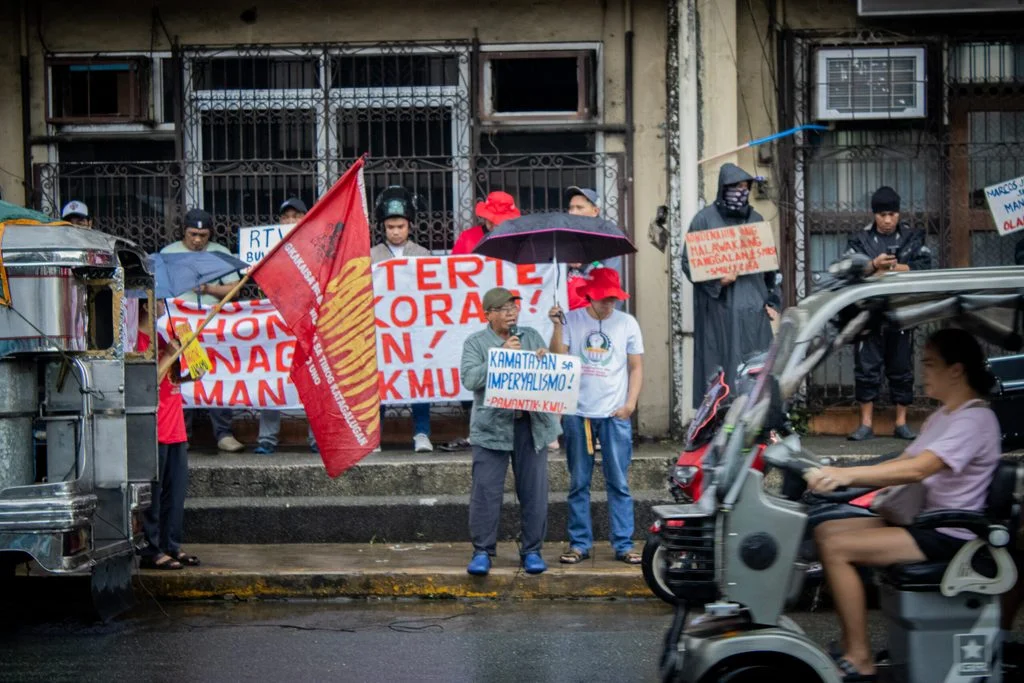
Protests unfolded nationwide despite inclement weather, with labor organizations like Kilusang Mayo Uno rallying against the government's failure to enhance labor conditions. Even more pressing is the administration’s engagement with international powers, particularly the United States, which has been criticized for prioritizing economic interests over human rights.
Alongside these labor demonstrations, groups such as Anakbayan Southern Tagalog converged in Calamba to oppose broader socio-economic policies, including the controversial Pax Silica initiative designed to enhance technology production in the Philippines as a counter to China's influence. (and this is the part most people overlook) The initiative reflects a push toward modernization that, while potentially beneficial, may carry risks of perpetuating historical inequities and displacement.
Implications and Future Outlook
Through these commemorations and protests, activists assert that the struggle against oppression remains urgent and that the lessons of the past must guide the fight for justice and equality in the contemporary context. The ongoing activism suggests a society not easily resigned to apathy, yet the persistent risks of authoritarianism and historical erasure remain threats that cannot be ignored. This is more significant than it looks because it reflects a societal commitment to uphold democracy — and to do so requires not just memory but action.
Ultimately, the legacy of Martial Law serves as a cautionary tale but also as a call to action. The dialogue surrounding it shapes the political dynamics of today and lays the groundwork for tomorrow. It's clear: while the past informs current struggles, it’s the lessons learned that will shape the future.


